
Cullen’s Life in Prison
The Good Nurse: A True Story of Medicine, Madness, and MurderThis thread follows Cullen’s transition from hospital employee to prisoner, where routine, religion, and the possibility of a kidney donation reshape his public identity.
increasing Bearing strength in each event
 decreasing
Bearing strength in each eventdecreasingA Cell and a Routine
A Cell and a Routine
A Different Structure
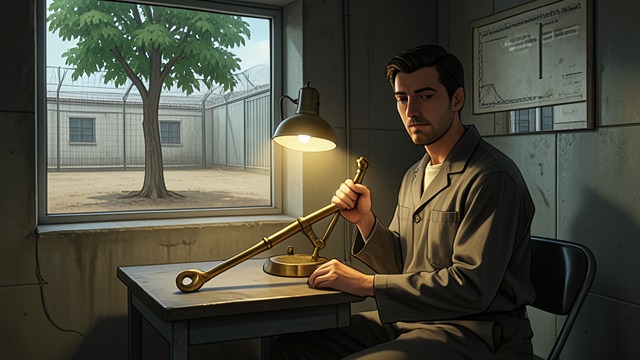
After his arrest and guilty pleas, Cullen lived in custody under regular schedules and restrictions. He read, exercised, met with clergy, and adjusted to a routine more stable than the unstable life he had known outside prison.
Attention Continues
Investigators returned to review charts and ask him about patients across his career. Cullen remained at the center of the case, able to revisit deaths through records while the public and the families continued to focus on him.
Prison confined Cullen but did not make the past disappear. The ongoing review gave him attention and a continuing role in how the crimes were understood.
Learning the Saints
Learning the Saints
A Chaplain’s Work
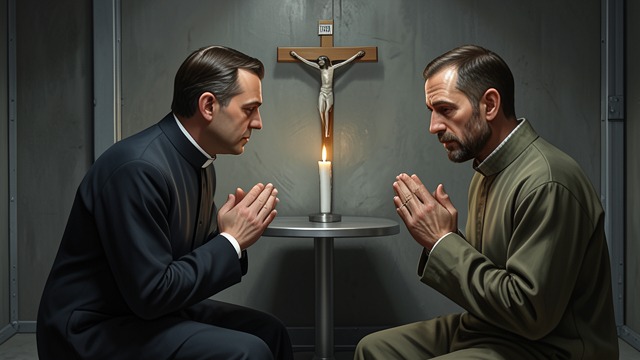
Kathleen Roney ministered to Cullen and introduced him to Christian prayer and the lives of saints. His childhood memories of Catholicism were fragmentary, and prison gave him time to study religious practices.
A Changed Language
Cullen recited the Jesus Prayer and spoke with clergy about moral questions, including whether he could donate an organ. Roney saw a complicated person rather than a simple monster, without denying the scale of his crimes.
Religion offered Cullen a framework for reflecting on guilt and possible good. It also raised questions about redemption that victims’ families and observers did not have to answer in the same way.
The Kidney Request
The Kidney Request
A Plea From a Family
Cullen received a newspaper clipping about Ernie Peckham, who had kidney failure and needed a donor. Peckham was connected to Cullen through Catherine Westerfer’s family, but they were not close.
A Donor’s Offer
Cullen asked whether a prisoner could donate a kidney. He said that the opportunity was possible and that it seemed right to help when someone had asked.
The offer startled families who knew Cullen as a killer of vulnerable patients. It made his motives difficult to read: compassion, religious hope, self-image, and a desire to be useful could coexist without cancelling his crimes.
A Perfect Match
A Perfect Match
Testing the Possibility
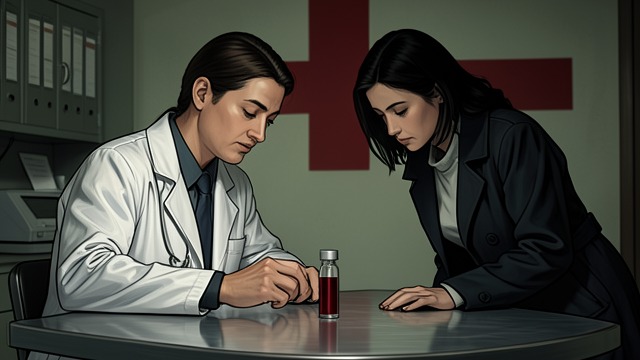
Cullen’s blood proved to be a rare perfect tissue match for Peckham. The result seemed extraordinary to Roney and others who had helped arrange testing, but further medical and security approvals remained necessary.
Delay and Suspicion
Peckham’s family and victims’ relatives questioned whether the donation was appropriate. Some feared that Cullen was seeking publicity or another way to exercise control over a life.
The match created an ethical conflict with no simple resolution. A medically useful organ came from a man whose prior access to patients had been used for murder, and the donor’s intentions could not be independently known.
The Transplant Proceeds
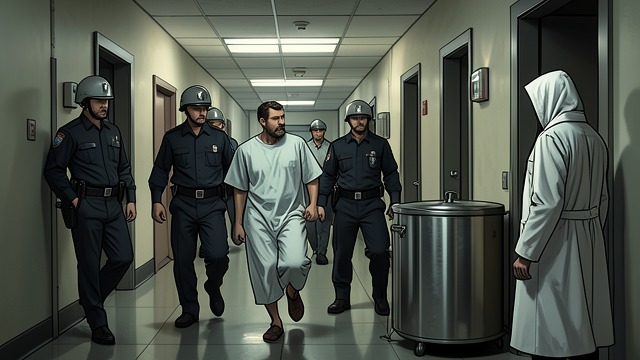
The Transplant Proceeds
A Guarded Operation
Under an assumed hospital identity, Cullen was taken for surgery and his kidney was transported to Stony Brook Hospital. Security measures concealed the donor’s identity during the procedure.
A Life Extended
The transplanted kidney began functioning in Peckham’s body. The act could not undo the lives Cullen had taken, but it gave a seriously ill recipient a chance to live beyond dialysis.
The transplant completed a story that remained morally unsettled. Cullen described the donation as something positive he could do, while others saw the risk of allowing him to turn his body into a new public argument about redemption.
2003 to 2005
2003 to 2005
August 2005
2005 to 2006
August 2006
